
FellowshipPreaching/TeachingLeadershipCelebrate RecoveryDiscipleshipSmall GroupsEvangelismWorshipMinistry
Becoming a Purpose Driven Church (An Interview with Rick Warren, Part 1)
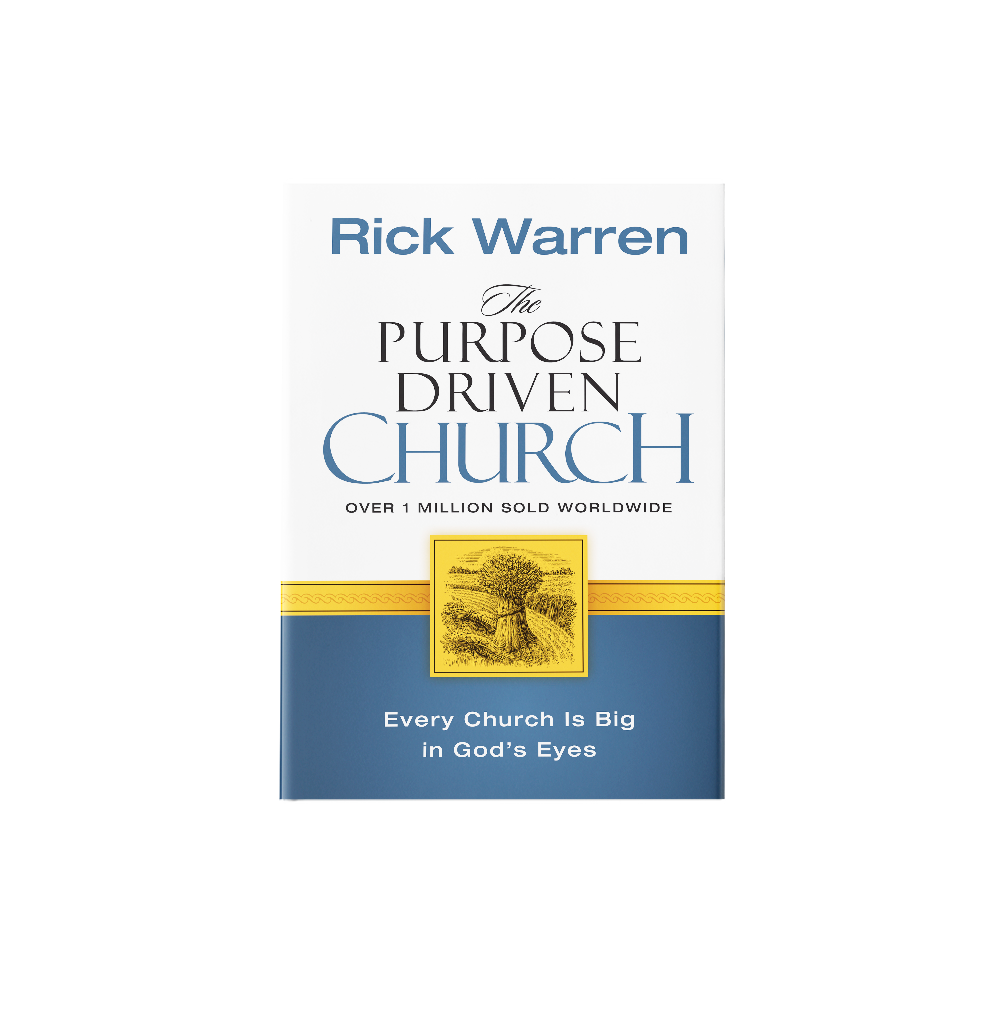



Editor's Note: The following is a re-published version of an inspiring interview with Pastor Rick Warren from 2002, and the principles are still extremely relevant to where the church is today. Pass this one along...
Jon Walker: You’re known for saying that pastors need to be more "lost" centered, that is, looking at their church from the perspective of someone who doesn’t go to church. Could you elaborate on that? Rick Warren: The most overlooked principle for church growth is we have to love people the way Jesus did. That’s it! The motive behind everything we’ve done at Saddleback is that we love and care about lost people. The reason Jesus attracted such large crowds is because he loved people. On the other hand, I’ve heard churches justify their lack of growth by saying, "We’re small because we haven’t watered down the Gospel.” But maybe the real reason they don’t have a crowd is because they don't want a crowd! They love their own comfort more than they love lost people. To reach unbelievers you have to move outside your own comfort zone and do things that often feel awkward and uncomfortable to you. It takes unselfish people to grow a church. Lost people have a lot of problems and their lives are messy. It’s not by accident that Jesus compared evangelism to fishing. Fishing is often messy and smelly. So many churches want the fish they catch to be prescaled, gutted, cleaned and cooked. That’s why they never reach anyone. If your church is serious about reaching the unchurched, you must be willing to put up with people who have a lot of problems. The secret of reaching unbelievers is learning to think like an unbeliever. But the problem is – the longer you’re a Christian, the less you think like an unbeliever. And if you’re a seminary-trained pastor, you’re even more removed from unbelievers. You think like a pastor, not a pagan. So you have to intentionally learn to think like an unbeliever again. Paul says, "I become all things to all men so I may, in some way, win some.” What he meant was he let his target determine his approach. When with Jews, he communicated like a Jew. When he was with Gentiles, he communicated like a Gentile. I’m sure if Paul came to Southern California, he’d learn to communicate in Southern Californian terms. Some people think that communicating differently in different cultures is just being a chameleon, but actually it means you're being strategic. You don’t compromise the message. That message is, the faith once delivered for the saints, and we don’t have an option to change the message. But the methods of sharing it have to change with every new generation and location. The programs and tools we used when I was a youth pastor in inner city LA were different from those used as a short-term missionary in Japan, and those methods were different from what we’re doing now at Saddleback. There is no one way to grow a church! It takes all kinds of churches to reach all kinds of people. If you’re getting the job done – lives are being changed – then I like the way you’re doing it, whether or not it’s my style of ministry. Walker: In other words, you’re not interested in Saddleback clones. Warren: Absolutely not! Not one of the dozens of mission churches we’ve planted is doing it exactly like us. We believe every church must have its own unique thumbprint. That’s what The Purpose Driven Church is all about. If a principle is biblical, I believe it is transcultural. In other words, it will work anywhere. But you must filter those principles through the culture of the community, the makeup of the congregation, and the personality of the pastor. Purpose Driven churches are all committed to the same five New Testament purposes of the church, but these congregations come in all sizes, shapes, and cultures. God’s purposes for the church never change, but the programs and methods do. Look around and it’s obvious that God loves variety. He loves to do things in more than one way! Walker: What about prayer and dedication? Is the growth of a church based upon the pastor’s commitment? Warren: It’s a myth that all you need is prayer and dedication to grow a healthy church. Some of the most dedicated prayer warriors I know are pastors of dying churches. It really bothers me that some pastors' conferences promote that myth - leaving pastors feeling discouraged and guilty instead of encouraged. We’ve all heard speakers claim, "If you’ll just pray more, preach the Word, and be dedicated, then your church will grow.” Well, that’s just not true. I can show you thousands of churches where pastors are doctrinally sound; they love the Lord; they’re committed and Spirit-filled and yet their churches are dying on the vine. For instance, in my own denomination about 70 percent of the churches are either plateaued or declining. Is that because 70 percent of our pastors are not dedicated? Of course not. It’s a complete myth. If dedication is all that is needed to grow a church, 99 percent of our churches should be growing today, because most pastors are genuinely dedicated. But growing a healthy church is not that easy or simple. It involves many different factors and requires certain leadership skills. Any time you hear a person say, "This is the one way to growth,” you can be sure they’re wrong because there are many keys to growth. That’s why I'm convinced that the key issue for our congregations in the 21st century is church health - not church growth. Focusing on church growth is the wrong focus. If we’ll focus on developing healthy churches, they will grow automatically. All living things grow – if they are healthy! I don’t have to tell my kids to grow. They do it automatically. Now, what makes a healthy church? The answer is "balance,” just like in the human body. Your body has a number of different systems: a circulatory system, a skeletal system, respiratory system, central nervous system, digestive system and others. When these systems are in balance we call that “health.” When they are out of balance, we call it, “dis-ease,” disease. Likewise the Body of Christ, the church, is made up of different systems, each fulfilling a different purpose: for worship, fellowship, evangelism, discipleship, and ministry. When you have a healthy system or process for each of these purposes, and these systems are balanced, the church naturally grows! But here’s the catch: unless you set up an intentional strategy and structure to ensure balance between the five purposes of the church, then your church will tend to overemphasize the purpose the pastor feels most passionate about. If he has a heart for evangelism, the church may reach lots of people, but nobody grows up in the faith. If he has a gift of teaching, the church will develop mature believers, but will tend to neglect winning the lost. If he has pastoral gifts, the church will have great fellowship and care, but the church’s ministry to the community will suffer or there will be little evangelism. You must set up a Purpose Driven structure that allows the church to become more than just an extension of its pastor. Every church is driven by something: tradition, programs, finances, events, seekers, and even buildings. But to be healthy, it must become Purpose Driven. They need a strategy that will help them grow warmer through fellowship, deeper through discipleship, stronger through worship, broader through ministry and larger through evangelism. Sadly, many churches are personality driven. This puts the congregation in a very precarious position if the leader dies, moves, or has a moral failure. At Saddleback we’ve built the church on purpose, not personality. If I were to die right now, we’d lose maybe 10 percent of the “fringe” people who come to hear me, but that would still leave 90 percent of the other people to attend each week. No church is perfect but you can be healthy without being perfect. Walker: Saddleback has no committees. I’m wondering – can you be a church and not have committees? (Laughter) Warren: That’s funny. It’s true that we have no committees, but we do have lots of different lay ministries. What’s the difference? Committees discuss but ministries do. Committees argue while ministries act. Committees maintain while ministries minister. Committees talk and consider while ministries serve and care. Committees make decisions that they expect other people to implement. At Saddleback, the implementers are the decision-makers. The people who do the ministry get to make their own decisions about that ministry. We do not separate authority from responsibility. We trust people with both. Here’s a radical question: What do these words and phrases have in common: majority rule, parliamentary procedures, ballots, boards, board meetings, business meetings, elections, voting, and committees. None of them are found in the Bible. Yet how many churches do you know that are formed on committees, boards, voting, and majority rule? What we have done is taken an American form of government and pressed it upon the church. The result is often the church is as ineffective and bureaucratic as the government is. We must remember that the church is a body not a business. It is an organism not an organization, and so God intends for it to operate on the basis of spiritual gifts, not elected offices. There is not a single example of voting to elect a pastor or any other church leader person in the New Testament. Voting was so foreign to the New Testament mind that when they chose Judas’ replacement, they cast lots. They were more likely to draw straws than vote.
CLICK HERE FOR PART 2
Jon Walker: You’re known for saying that pastors need to be more "lost" centered, that is, looking at their church from the perspective of someone who doesn’t go to church. Could you elaborate on that? Rick Warren: The most overlooked principle for church growth is we have to love people the way Jesus did. That’s it! The motive behind everything we’ve done at Saddleback is that we love and care about lost people. The reason Jesus attracted such large crowds is because he loved people. On the other hand, I’ve heard churches justify their lack of growth by saying, "We’re small because we haven’t watered down the Gospel.” But maybe the real reason they don’t have a crowd is because they don't want a crowd! They love their own comfort more than they love lost people. To reach unbelievers you have to move outside your own comfort zone and do things that often feel awkward and uncomfortable to you. It takes unselfish people to grow a church. Lost people have a lot of problems and their lives are messy. It’s not by accident that Jesus compared evangelism to fishing. Fishing is often messy and smelly. So many churches want the fish they catch to be prescaled, gutted, cleaned and cooked. That’s why they never reach anyone. If your church is serious about reaching the unchurched, you must be willing to put up with people who have a lot of problems. The secret of reaching unbelievers is learning to think like an unbeliever. But the problem is – the longer you’re a Christian, the less you think like an unbeliever. And if you’re a seminary-trained pastor, you’re even more removed from unbelievers. You think like a pastor, not a pagan. So you have to intentionally learn to think like an unbeliever again. Paul says, "I become all things to all men so I may, in some way, win some.” What he meant was he let his target determine his approach. When with Jews, he communicated like a Jew. When he was with Gentiles, he communicated like a Gentile. I’m sure if Paul came to Southern California, he’d learn to communicate in Southern Californian terms. Some people think that communicating differently in different cultures is just being a chameleon, but actually it means you're being strategic. You don’t compromise the message. That message is, the faith once delivered for the saints, and we don’t have an option to change the message. But the methods of sharing it have to change with every new generation and location. The programs and tools we used when I was a youth pastor in inner city LA were different from those used as a short-term missionary in Japan, and those methods were different from what we’re doing now at Saddleback. There is no one way to grow a church! It takes all kinds of churches to reach all kinds of people. If you’re getting the job done – lives are being changed – then I like the way you’re doing it, whether or not it’s my style of ministry. Walker: In other words, you’re not interested in Saddleback clones. Warren: Absolutely not! Not one of the dozens of mission churches we’ve planted is doing it exactly like us. We believe every church must have its own unique thumbprint. That’s what The Purpose Driven Church is all about. If a principle is biblical, I believe it is transcultural. In other words, it will work anywhere. But you must filter those principles through the culture of the community, the makeup of the congregation, and the personality of the pastor. Purpose Driven churches are all committed to the same five New Testament purposes of the church, but these congregations come in all sizes, shapes, and cultures. God’s purposes for the church never change, but the programs and methods do. Look around and it’s obvious that God loves variety. He loves to do things in more than one way! Walker: What about prayer and dedication? Is the growth of a church based upon the pastor’s commitment? Warren: It’s a myth that all you need is prayer and dedication to grow a healthy church. Some of the most dedicated prayer warriors I know are pastors of dying churches. It really bothers me that some pastors' conferences promote that myth - leaving pastors feeling discouraged and guilty instead of encouraged. We’ve all heard speakers claim, "If you’ll just pray more, preach the Word, and be dedicated, then your church will grow.” Well, that’s just not true. I can show you thousands of churches where pastors are doctrinally sound; they love the Lord; they’re committed and Spirit-filled and yet their churches are dying on the vine. For instance, in my own denomination about 70 percent of the churches are either plateaued or declining. Is that because 70 percent of our pastors are not dedicated? Of course not. It’s a complete myth. If dedication is all that is needed to grow a church, 99 percent of our churches should be growing today, because most pastors are genuinely dedicated. But growing a healthy church is not that easy or simple. It involves many different factors and requires certain leadership skills. Any time you hear a person say, "This is the one way to growth,” you can be sure they’re wrong because there are many keys to growth. That’s why I'm convinced that the key issue for our congregations in the 21st century is church health - not church growth. Focusing on church growth is the wrong focus. If we’ll focus on developing healthy churches, they will grow automatically. All living things grow – if they are healthy! I don’t have to tell my kids to grow. They do it automatically. Now, what makes a healthy church? The answer is "balance,” just like in the human body. Your body has a number of different systems: a circulatory system, a skeletal system, respiratory system, central nervous system, digestive system and others. When these systems are in balance we call that “health.” When they are out of balance, we call it, “dis-ease,” disease. Likewise the Body of Christ, the church, is made up of different systems, each fulfilling a different purpose: for worship, fellowship, evangelism, discipleship, and ministry. When you have a healthy system or process for each of these purposes, and these systems are balanced, the church naturally grows! But here’s the catch: unless you set up an intentional strategy and structure to ensure balance between the five purposes of the church, then your church will tend to overemphasize the purpose the pastor feels most passionate about. If he has a heart for evangelism, the church may reach lots of people, but nobody grows up in the faith. If he has a gift of teaching, the church will develop mature believers, but will tend to neglect winning the lost. If he has pastoral gifts, the church will have great fellowship and care, but the church’s ministry to the community will suffer or there will be little evangelism. You must set up a Purpose Driven structure that allows the church to become more than just an extension of its pastor. Every church is driven by something: tradition, programs, finances, events, seekers, and even buildings. But to be healthy, it must become Purpose Driven. They need a strategy that will help them grow warmer through fellowship, deeper through discipleship, stronger through worship, broader through ministry and larger through evangelism. Sadly, many churches are personality driven. This puts the congregation in a very precarious position if the leader dies, moves, or has a moral failure. At Saddleback we’ve built the church on purpose, not personality. If I were to die right now, we’d lose maybe 10 percent of the “fringe” people who come to hear me, but that would still leave 90 percent of the other people to attend each week. No church is perfect but you can be healthy without being perfect. Walker: Saddleback has no committees. I’m wondering – can you be a church and not have committees? (Laughter) Warren: That’s funny. It’s true that we have no committees, but we do have lots of different lay ministries. What’s the difference? Committees discuss but ministries do. Committees argue while ministries act. Committees maintain while ministries minister. Committees talk and consider while ministries serve and care. Committees make decisions that they expect other people to implement. At Saddleback, the implementers are the decision-makers. The people who do the ministry get to make their own decisions about that ministry. We do not separate authority from responsibility. We trust people with both. Here’s a radical question: What do these words and phrases have in common: majority rule, parliamentary procedures, ballots, boards, board meetings, business meetings, elections, voting, and committees. None of them are found in the Bible. Yet how many churches do you know that are formed on committees, boards, voting, and majority rule? What we have done is taken an American form of government and pressed it upon the church. The result is often the church is as ineffective and bureaucratic as the government is. We must remember that the church is a body not a business. It is an organism not an organization, and so God intends for it to operate on the basis of spiritual gifts, not elected offices. There is not a single example of voting to elect a pastor or any other church leader person in the New Testament. Voting was so foreign to the New Testament mind that when they chose Judas’ replacement, they cast lots. They were more likely to draw straws than vote.
CLICK HERE FOR PART 2
Recent Articles

Living in the Freedom You Preach
Pastor, here in the United States this is the week we celebrate our freedom, and many of you will work a line about it into Sunday's sermon. If you minister in another country, stay with me. The freedom I most want for you was never about a flag anyway. So here is the harder question: Are you actually free?A lot of us preach freedom in Christ on Sunday and then live all week as if everything depends on us. We can't stop working. We feel guilty when we rest. We lie awake running tomorrow's list.We have a name for that today: workaholism. The Bible doesn't use the word, but it has plenty to say about it. And "dedicated" isn't it.“Don’t wear yourself out trying to get rich. Be wise enough to know when to quit" (Proverbs 23:4 NLT). God honors hard work, but he calls wearing yourself out foolishness. Ecclesiastes says it even more bluntly: "Only someone too stupid to find his way home would wear himself out with work" (Ecclesiastes 10:15 GNT).So why do we do it? Why do we run ourselves into the ground for a church that belongs to Jesus anyway? It usually comes down to what is driving us underneath.Notice what's really driving youFor most of us, the engine is insecurity. There is a voice that whispers, "You're a nobody. Prove yourself." So you keep working to prove your worth. And that voice is never satisfied. You finish something good, and the voice says, "That's fine, but it's not enough." So you work more.For others, it is worry. "I am worn out by my worries," the psalmist said (Psalm 55:2 GNT). You can't afford a day off, because the fear of dropping the ball keeps you going.And sometimes, if you’re honest, it’s comparison. You look at the church down the road or the pastor with the bigger platform, and you tell yourself you just need to do a little more.None of those chains come from God. They come from inside you. And Jesus wants to set you free from every one of them.Realize your worthThe first step toward freedom is settling the question your insecurity keeps asking."See how much the Father has loved us! His love is so great that we are called God's children—and so, in fact, we are" (1 John 3:1 GNT). God says you are precious in his sight (Isaiah 43:4).When that truth finally sinks past your head and into your heart, a load lifts off your back. You stop having to prove yourself. God already loves you. He already approves of you. You don't have to earn it in the pulpit on Sunday.So ask yourself the freedom question: What am I trying to prove, and to whom?Enjoy what God has already givenFreedom also means contentment."All of us should eat and drink and enjoy what we have worked for. It is God's gift" (Ecclesiastes 3:13 GNT). For most of us, the pull isn't money. It's more. A bigger crowd. A stronger program. More influence. We get so fixated on the church we wish we had that we miss the one God actually gave us.But the people in your pews this Sunday are a gift. This season of ministry, limits and all, is a gift. Contentment is learning to receive what God has given instead of resenting what he hasn't.So enjoy the people he has actually entrusted to you and the work he has actually called you to. Ask yourself: How much would finally be enough?Limit your labor on purposeHere is where freedom gets practical. Limiting your work is a decision, not a feeling."You have six days in which to do your work, but the seventh day is a day of rest dedicated to me" (Exodus 20:9-10 GNT). God built rest into the week. When you refuse to take it, you are not being more faithful. You are arguing with the way he made you.So put it on paper. Decide how many hours you’ll work, how many evenings you’ll be at home, which day you’ll take off. If you need to, ask someone to hold you to it.The freedom you preach is yours to liveThis week, while the fireworks go off and you remind your people that Christ has set their spirits free, hear it for yourself. You don't have to prove anything. You don't have to try to carry what only God really can carry.The church is his. Your worth is settled. So work hard this week. Then stop. Rest in the freedom you keep preaching to everyone else.

Refuse the Hook: When Critics Want a Fight
"If someone does wrong to you, do not pay him back by doing wrong to him. Try to do what everyone thinks is right. Do your best to live in peace with everyone." Romans 12:17-18 (NCV)Pastor, can God bring something good out of being criticized, attacked, or treated unfairly in ministry?He can. It's just hard to believe in the moment, when the email lands, when the comment thread turns ugly, when someone in your own church decides you're the problem.When someone wrongs you, the pull to defend yourself or set the record straight is strong. But God is just. It's his job to discipline, to restore, and to turn things around for good."If someone does wrong to you, do not pay him back by doing wrong to him. Try to do what everyone thinks is right. Do your best to live in peace with everyone. My friends, do not try to punish others when they wrong you, but wait for God to punish them with his anger. It is written: 'I will punish those who do wrong; I will repay them,' says the Lord" (Romans 12:17-19 NCV).Notice the words "do your best." In other words, live in peace with everyone as much as possible. God says it that way because he knows ministry sometimes puts you near some people who are almost impossible to get along with. When you're attacked, God is asking you to walk away, not to retaliate. You might say, "But you don't know what they've done. They've hurt me. They've hurt my family. I want to get even."Here's why it’s so powerful to walk away. Critics want to hook you. They want your attention, your reaction, your time. They can't stand being ignored. It's the same online, where it feels almost impossible to leave an attack sitting in the comments without answering. But when you refuse to react, you take the control back. If they can't engage you, they can't control you.Anytime you say, "You make me so mad," you've handed someone else the controls to your own heart. You don't want to do that. Don't give anyone that kind of power over you.Romans 12 puts a choice in front of you: Will you take revenge yourself, or leave the situation in God’s hands?Refuse to retaliate. Walk away. Let it go. And let God do his work.

When You Can't Make Yourself Start
You know the feeling. You've got a list this week that actually matters: Call everyone in your small group, prep the lesson, recruit a few volunteers, rehearse the music for Sunday. You know you'll be glad when it's done. You know people are counting on you. And still, you can't make yourself start.After decades of ministry, here's what I've learned about that moment: It’s up to me to keep my own fire burning. I don't focus on motivating other people; I only worry about motivating myself. If I stay motivated, it becomes contagious. People catch your enthusiasm, and they catch your vision. So your first job isn't to light a fire under everyone else; it's to keep your own burning.That's harder than it sounds, because so much of ministry is plain mundane. There's no thrill in stuffing bulletins or setting up and taking down. But Paul says, "Always give yourselves fully to the work of the Lord, because you know that your labor in the Lord is not in vain" (1 Corinthians 15:58 NIV). The Good News Translation says it this way: "You know that nothing you do in the Lord's service is ever useless" (1 Corinthians 15:58). Jesus said even a cup of cold water given in his name counts. The work matters. The real question is how you keep going when you don't feel like it.Here's how I do it. It comes down to three things: Get it on paper, get started, and keep the fire burning.Plan it: Get it out of your head and onto paper.Most of the weight you're carrying isn't the work itself. It's the vague sense that you're not getting it all done. Dawson Trotman, who founded The Navigators ministry in the 1930s, said, "Thoughts disentangle themselves when they pass through the lips and the fingertips." If I can say it and write it down, it's clear. If I haven't written it down, it stays vague. And vague is heavy.So write out what you want to accomplish. Then break it down until it's small enough that you have no excuse not to start. When I planted Saddleback, I'd never started a church in my life. So I got a stack of cards and wrote one task on each: Rent a building, print a bulletin, find someone to lead music, line up nursery workers. Then I laid them out, put them in order, and worked backward from opening day until I knew exactly what had to happen first.Inch by inch, anything's a cinch. How do you eat an elephant? One bite at a time. Decide what comes first, put a date on it, and you've turned a mountain into a next step.Start it: The launch is the hard part.Here's the most honest thing I can tell you about motivation. Most of the time when we say "I can't," what we really mean is "I don't want to." Be honest enough to know the difference. Some days you just have to get tough with yourself and do it whether you feel like it or not.Because here's the secret of success in one sentence: Successful people have developed the habit of doing things unsuccessful people don't feel like doing.Give it five minutes.When a task feels too big, I play a game with myself. I call it the Five-Minute Game. I tell myself, "I don't want to do this, but I'll give it five minutes." Almost every time, once I get going, it's not nearly the deal I thought it was.I've written books that way. I'd roll a blank sheet into the typewriter, type "My Next Book, by Rick Warren," and pull it back out. Sometimes that's all I did. Then I got up and walked away. But I'd started. Once the rocket is off the launch pad, the rest gets easier. How many projects have sat around your house for six months until the day you finally did one and thought, "Why did I wait? That took 25 minutes."Don't wait until it's perfect.Perfectionism produces procrastination. It paralyzes you. We tell ourselves, "If I can't do it well, I won't do it at all." But very few things in this world are ever perfect. If it's worth doing, do it, whether you do it perfectly or not. Give yourself the right to make mistakes, and you'll stop letting indecision freeze you in place.Sustain it: Keep your own fire burning.Starting is one battle. Staying motivated over the long haul is another. A few things keep me going.Remember the payoff. When my mind isn't there after a long week, I ask myself, "How am I going to feel when this is finished? What's it going to accomplish?" The Bible says Jesus endured the cross because he looked to the joy beyond it. Much of ministry is mundane, and you do it for the result, not the thrill.Stay optimistic. Optimism creates energy. The person who says "I can" and the person who says "I can't" are both right. I've walked into church sure I wouldn't make it through the day, then reminded myself, "I can do all things through Christ who strengthens me" (Philippians 4:13 NKJV). Tell yourself you can.Don't carry it alone. If a big task is all on you, you'll probably put it off. Get a partner. "Two are better than one. . . . A cord of three strands is not quickly broken" (Ecclesiastes 4:9, 12 NIV). If you schedule time with someone to complete a task together, you're far more likely to actually do it.I keep a running list of one-liners taped where I can see them when I need a nudge:Do the worst first. Doing beats stewing. If not today, when? Winners don't wait. Beginning is half done. Choose this day to use this day.So get started.Pick the one ministry task you've been avoiding this week. Don't wait until you feel like it. Get it out of your head and onto paper. Give it five minutes, and let your own motivation do the rest. Nothing you do in the Lord's service is ever without value, and the fire you keep burning is the one your people will catch.

Lead from Grace
“I no longer count on my own righteousness through obeying the law; rather, I become righteous through faith in Christ. For God’s way of making us right with himself depends on faith.” Philippians 3:9 (NLT)Pastor, few people are more tempted to earn God’s love than you are.You spend your week measuring outcomes. Attendance. Giving. Who showed up, and who slipped away. From there it’s a short step to measuring your standing with God by the same numbers.But realizing there’s nothing you can do to make God love you more is one of the most liberating truths you’ll ever preach. It’s also one of the hardest to believe for yourself.The Living Bible paraphrase says, “We Christians glory in what Christ Jesus has done for us and realize that we are helpless to save ourselves” (Philippians 3:3).Every time you forget that and start thinking you have to earn God’s love by your work in the pulpit or your numbers on Monday, that’s legalism. And it will quietly rob you of joy.Legalism is trusting in what you can do for God instead of trusting in what Jesus has already done for you. For a pastor, it usually hides behind other things. Harder work, longer hours, one more sermon, one more meeting. And slowly your sense of being loved starts to rise and fall with your last result.Paul knew how to relax in grace. He said, “I no longer count on my own righteousness through obeying the law; rather, I become righteous through faith in Christ” (Philippians 3:9 NLT). The way you earn God’s love is this: You don’t. It’s not about your performance; it’s about his pardon.How do you know when you’ve slipped into legalism? You get critical. When you don’t feel accepted and loved yourself, it’s easier to be hard on the volunteer who let you down, the board member who pushed back, or the church down the street that’s growing faster than yours.How do you know you’re living by grace? You’re gracious with the people you lead. You forgive more easily because you remember how often God forgives you. And because you’re not trying to earn your way to heaven, or prove your worth by Sunday, you can finally relax. In fact, the more you live by grace and lead from grace, the more joy you’ll have. Tomorrow morning, before you answer a single email, remind yourself: “Lord, today I’m thankful that I am completely forgiven. There’s nothing I can do to make you love me more. And there’s nothing I could do that would make you love me less.”
At Pastors.com, our passion is to have healthy pastors leading healthy churches for the global glory of God.
Categories
Topics
More Resources
Customer Service


© 2025 Pastors.com All rights reserved.
PO Box 80448, Rancho Santa Margarita, CA 92688